
The Role of a Local Representative in Telecom Type Approval: Why It Can Make Market Entry Easier
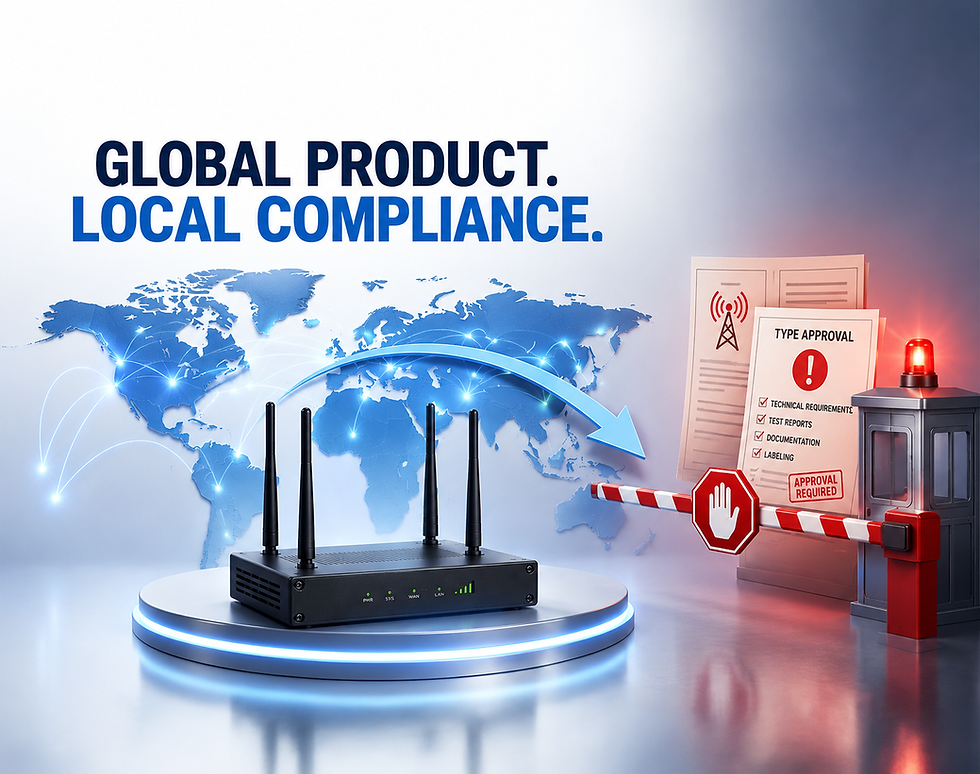
Your Product Is Ready. So Why Is the Launch Delayed?
Your engineering team has done the hard work. RF and other required compliance testing have been completed, the product meets the applicable technical standards, and your sales team is ready to enter a new market.
Then the telecom type approval process begins.
Instead of moving smoothly, the regulator may request clarifications, additional documents, or supporting information during the review process. In some countries, you may also discover that your company cannot submit the application directly because a locally established applicant, authorized representative, importer, or distributor is required.
The product is ready but the approval process slows everything down.
This is a common challenge for manufacturers expanding into international markets.
Many countries have their own telecom approval rules, and some require foreign manufacturers to work through a local representative, importer, distributor, or another locally established legal entity. Understanding these requirements early can help reduce delays and make the approval process much smoother.
What Is a Local Representative?
A local representative is a locally established legal entity or authorized organization that acts on behalf of a manufacturer during the telecom type approval process, where required or permitted by the regulator.
Depending on the country's approval rules, the local representative may:
Submit the application to the telecom regulator
Communicate with the regulatory authority
Respond to requests for additional information
Help manage approval documents
Support renewals, amendments, or future certificate updates where required
Not every country requires a local representative. Some regulators allow foreign manufacturers to apply directly, while others require applications to be submitted through a locally established company. Because the rules vary, it is always important to verify the latest requirements before starting an approval project.
Why Do Some Countries Require a Local Representative?
Many telecom and wireless devices connect to public communication networks or use regulated radio spectrum.
If questions arise after a product enters the market, regulators need a reliable point of contact that can respond and support compliance activities.
Local representation requirements are generally intended to support regulatory oversight and facilitate communication between authorities and market participants.
A local representative can help provide:
A local point of contact for the regulator
Facilitated communication during the review process
Support if additional information is requested
Assistance during market surveillance activities
Help with future approval updates when needed
A Local Representative Does More Than Submit Paperwork
Many manufacturers assume a local representative simply uploads documents and waits for approval.
In reality, experienced representatives often provide valuable support throughout the telecom regulatory approval process.
Keeping the Application Moving
During the review, regulators may request:
Technical clarifications
Updated test reports
Product photographs
Label information
Additional supporting documents
Responding quickly and accurately can help prevent unnecessary delays.
An experienced local representative understands what the regulator expects and helps coordinate responses between your company and the authority.
Helping Prepare the Right Documents
Each country's telecom equipment approval process is different.
A local representative can help organize documents such as:
Technical specifications
Test reports
Declarations of Conformity, where applicable
Product labels
User manuals
Other supporting documents required by the regulator
Submitting complete and accurate information the first time can help reduce review time and improve approval efficiency.
Supporting Compliance After Approval
Receiving a telecom type approval certificate is an important milestone, but it is not always the final step.
Some regulators may later request product information, conduct market surveillance activities, or require updates when products are modified.
Having an experienced local partner can make these activities easier to manage throughout the product's lifecycle and support ongoing regulatory compliance.
Do All Countries Require a Local Representative?
No.
Local representative requirements differ significantly from country to country.
Some regulators require foreign manufacturers to apply through a locally established company or authorized representative. Others allow manufacturers to submit applications directly.
For this reason, companies should always confirm the latest telecom regulatory requirements before planning international market access activities.
Countries Where Local Representation Is Commonly Required
Local representation requirements vary significantly across telecom markets.
Many countries in the Middle East, Africa, Asia, and Latin America either require or strongly encourage the use of a local representative during the approval process.
Examples include:
Bahrain
Various Latin American markets
Because regulations evolve regularly, manufacturers should always verify current requirements before planning market entry.
Choosing the Right Local Representative Matters
Selecting a representative based solely on cost can create challenges later.
Working with an inexperienced representative can increase the risk of:
Delayed responses to regulator inquiries
Incomplete application submissions
Missed renewal deadlines
Difficulties managing certificate updates
In some jurisdictions, approval records, certificates, or registrations may be linked to the local applicant or certificate holder. Before starting the approval process, manufacturers should clearly understand who will manage renewals, amendments, and future certificate changes.
Establishing clear responsibilities from the beginning can help avoid unnecessary complications later.
How to Choose the Right Partner
Before appointing a local representative, ask a few important questions:
Do they specialize in telecom type approval?
Do they understand the regulator's current requirements?
Will they keep you informed throughout the approval process?
Can they support renewals and future product updates?
Do they have experience working with international manufacturers?
Choosing an experienced partner can make the certification process more efficient, predictable, and easier to manage.
Final Thoughts
Expanding into new markets is about more than passing technical tests.
Every country has its own telecom approval process, documentation requirements, and regulatory expectations. Understanding these requirements and securing the right local support can help reduce delays, improve communication, and make global market access more predictable.
For manufacturers navigating international telecom certification requirements, local representation is often more than an administrative formality it can be a valuable part of a successful market entry strategy.
Need Help with Telecom Type Approval?
Whether you need guidance on local representative requirements, telecom type approval, wireless product certification, or global market access, Nano Technology Solutions is here to help.
Our regulatory specialists support manufacturers with telecom certification requirements across multiple countries and help simplify the approval process from start to finish.
Email: info@nanotechsol.com


Comments